The Exploding Demand for Coaching: A Mirror Reflecting Modern Leadership
The rise of the executive coach from a niche service for C-suite remediation to a ubiquitous tool for talent development is one of the most defining professional trends of the past decade. It’s no longer a sign of failure to have a coach; it's increasingly a prerequisite for success.
But what does this exponential, cross-industry demand for professional coaching actually tell us about the state of modern leadership and the challenges leaders face today? The answer is profound: The high demand for coaching reveals a fundamental gap between the traditional competencies of leadership and the complex demands of the 21st-century workplace.
The Death of the "Hero Leader"
Historically, leadership models were built on the idea of a singular figure who possessed all the answers. The high-demand for coaching signals that this model is unsustainable.
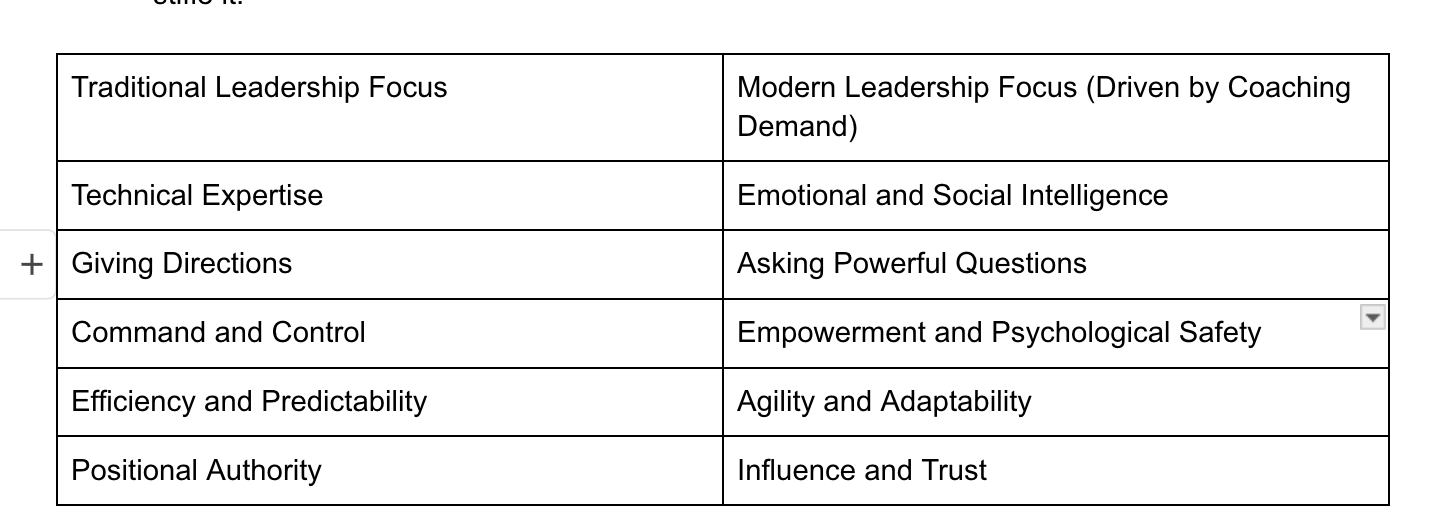
Modern leaders aren't expected to be all-knowing experts; they are expected to be master facilitators, connectors, and emotional regulators. They need tools to navigate ambiguity, foster psychological safety, and build resilient, empowered teams. A coach provides the structured space to develop these sophisticated, relational skills that a traditional management training program often overlooks.
The Pressure of Perpetual Disruption
Volatility, Uncertainty, Complexity, and Ambiguity (VUCA) isn't just a buzzword; it's the operational reality. Leaders operate under constant pressure to pivot, innovate, and manage simultaneous transformations (digital, cultural, economic).
This environment creates cognitive overload and burnout. Coaching serves as a crucial pressure valve and a strategic sounding board. It helps leaders:
Gain Clarity: Cutting through the noise to focus on core strategic priorities.
Enhance Resilience: Developing mental frameworks to cope with sustained high-stress environments.
Improve Decision-Making: Slowing down the thought process to ensure decisions are strategic, not reactive.
The Shift to Emotional and Social Intelligence
In a world where automation is handling routine tasks, the premium value of a human leader lies in their distinctly human capacities: empathy, communication, conflict resolution, and the ability to inspire trust.
The coaching process is inherently focused on these "soft skills," which are now recognized as the hardest and most valuable to master.
The demand for coaching highlights a collective recognition that leaders need dedicated, personalized development in:
Self-Awareness: Understanding one's triggers, biases, and leadership shadow.
Active Listening: Moving beyond transactional communication to truly understanding team members' perspectives.
Conflict Fluency: Handling disagreements productively to drive innovation rather than
The Need for Reflective Space
Perhaps the most simple yet powerful reason for the coaching boom is the loss of quiet, reflective time for leaders. The modern digital environment ensures that leaders are always "on," constantly reacting to messages and meetings.
Coaching carves out dedicated, protected time for introspection—a rare commodity. It's the one meeting where the agenda is solely the leader's development and well-being. This space allows for meta-cognition: thinking about how one thinks, planning how one will plan, and leading with intention rather than habit.
The high demand for coaching is not a temporary trend; it is a structural adjustment. It signals that leadership is no longer a fixed skill set but a continuous process of learning, unlearning, and adaptation.
For organizations, investing in coaching is an acknowledgment that the most effective leader today is not the one who knows the most, but the one who is the most self-aware, resilient, and skilled at unlocking the potential of others. The coach, therefore, is not an accessory, they are an essential partner in building the adaptive, human-centric leadership required to thrive in the modern age.